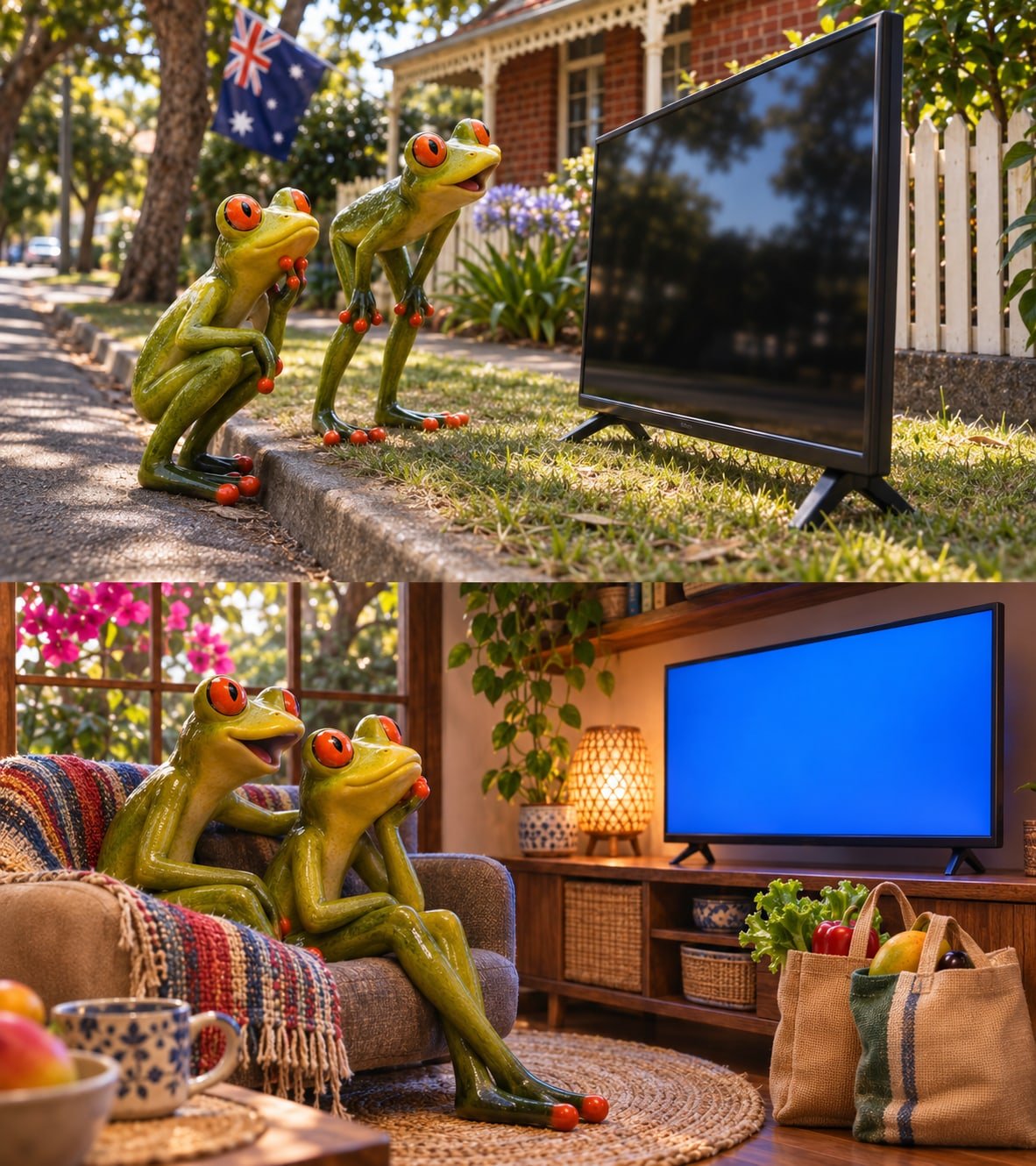
They were returning from buying potatoes, rice and meat when Sapito spotted the television. It stood outside a house beside other objects and was so large that the joke almost told itself: there was the one his brother wanted.
Sapito meant it as a joke. His brother treated it as a plan.
They stopped, walked around it and looked for obvious damage. The screen seemed intact. Sapito struggled to understand why someone would leave it outside. His brother was already working out how to fit it in the car.
He had an explanation he found persuasive: the power cord had not been cut. To him, that suggested the television might work. This was an interpretation drawn from previous finds, not a guarantee or a universal code. At that moment, it was enough to sustain his enthusiasm.
What followed was a game of Tetris involving a seventy-five-inch television, the shopping and a car never selected for that purpose. Seats came down and belongings were rearranged. The original account preserves the discomfort and improvisation of the journey. A fortunate anecdote should not be mistaken for an example of safe transport.
On the way home, Sapito considered the possibilities. Perhaps it would not turn on. Perhaps the screen would have a huge line through it. Perhaps all that effort would leave them with a useless object at home.
They found the switch and pressed it. They waited. The screen lit up from edge to edge. Sapito searched for marks and lines. Then they tried a film. Picture. Sound. It worked.
Behind his surprise lay a question no cable inspection could answer: why had something useful stopped being useful to somebody?
His brother and several friends had found other usable objects. Those experiences could not explain an entire country’s consumption habits. They did reveal a gap between what Sapito expected and what he observed. Until then, leaving something outside and preserving its value had seemed difficult to reconcile.
That afternoon, a television moved from a kerb to a living room. Something less visible shifted for Sapito: the assumption that an object’s value ends when its first owner lets it go.
How many things do we stop valuing simply because we have owned them for a long time?