
Sapito had just bought a motorcycle. He had been in Australia only a few weeks and was still riding with habits learned elsewhere. At the first corner, those habits moved faster than his attention: a wrong manoeuvre, a STOP sign he ignored and a police patrol in sight.
He tried to approach the officer. The officer’s gesture told him to stay where he was. Sapito struggled with the words, but understood the distance between the conversation he expected and the one taking place.
Asked for documents, he handed over everything: purchase papers, motorcycle documents, his licence and its translation. The officer returned to the patrol car. Waiting felt much longer with the siren and passing strangers watching.
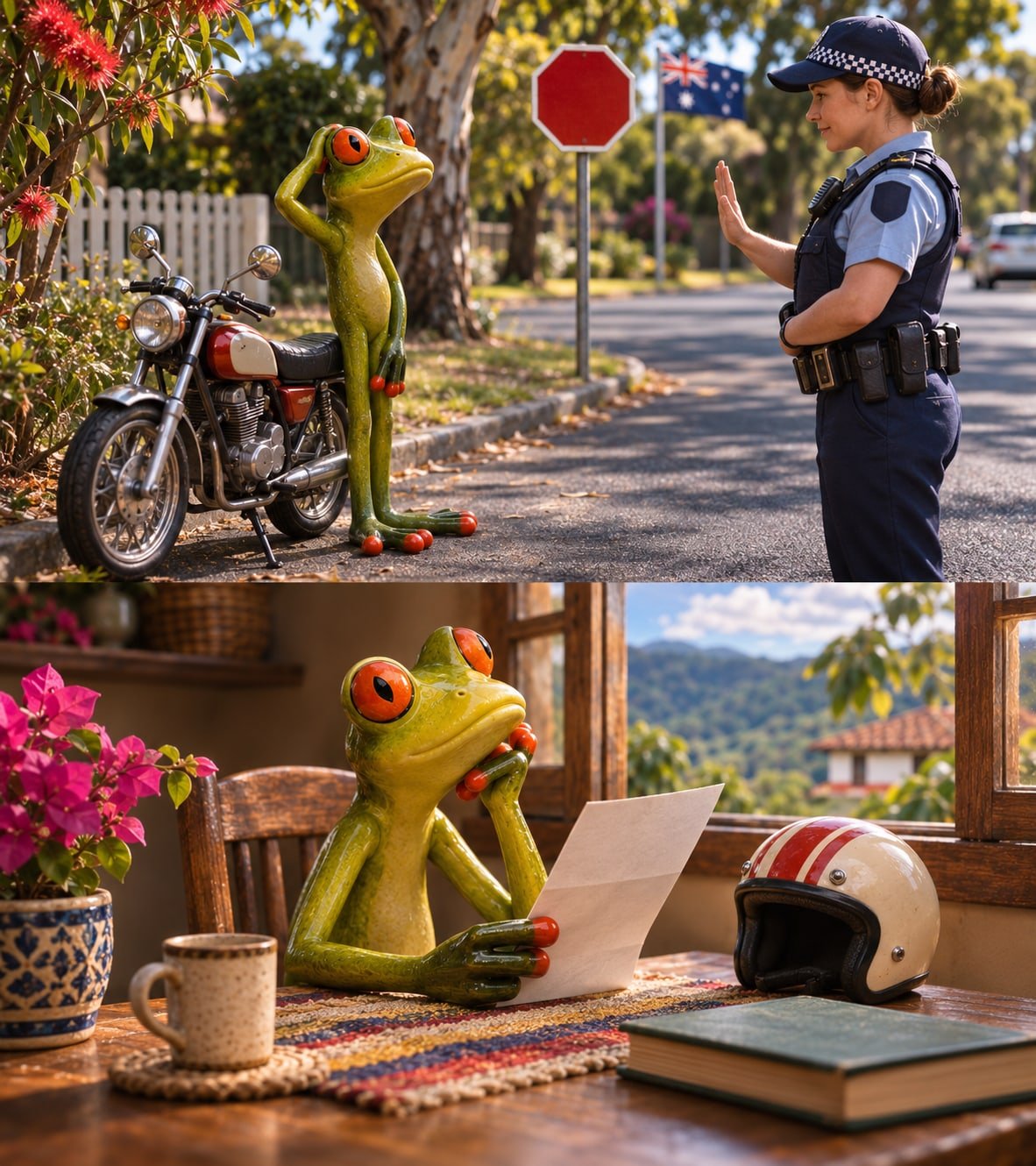
Sapito learned that he had committed several traffic offences. The original account also recalls an issue with his helmet’s fit. That detail belongs to his memory of the incident and is not an explanation of current regulations.
Feeling overwhelmed, he searched for a way out instead of accepting his mistake. He prepared a sentence using his phone’s translator. He wanted to ask how much money the officer would need to help him.
This was an attempt to offer money to avoid the consequences. That description matters, however frightened, newly arrived or unable to communicate the protagonist felt.
The officer pointed to the camera on his uniform and made a clear gesture of refusal. Sapito needed time to understand the words, but eventually recognised the boundary. He received a fine and left with a lesson more uncomfortable than a traffic correction.
Later, telling a friend what had happened helped him see his conduct from outside. He had confused asking for help with asking for an exception for himself. Fear explained the impulse without excusing it.
The original version makes broad comparisons between countries. This story does not need to assign corruption to one nationality or automatic virtue to another. Sapito at that corner is enough: his habit of seeking a shortcut had travelled with him.
Changing countries required learning signs, words and procedures. It also required reconsidering what he was willing to call normal.
Which habit would you stop justifying if you could observe it from outside?