
Sapito had crossed half the planet. His body was still following a timetable that no longer matched the clock, and his English covered only a few words. Arriving felt like an achievement. Understanding the questions was another matter.
At an airport checkpoint, an official began speaking. Sapito heard sounds, recognised an occasional word and searched for an answer that might prevent further questions. He chose the shortest: yes.
He repeated it. Without understanding, politeness seemed useful. But agreement did not clarify the conversation. It complicated it.
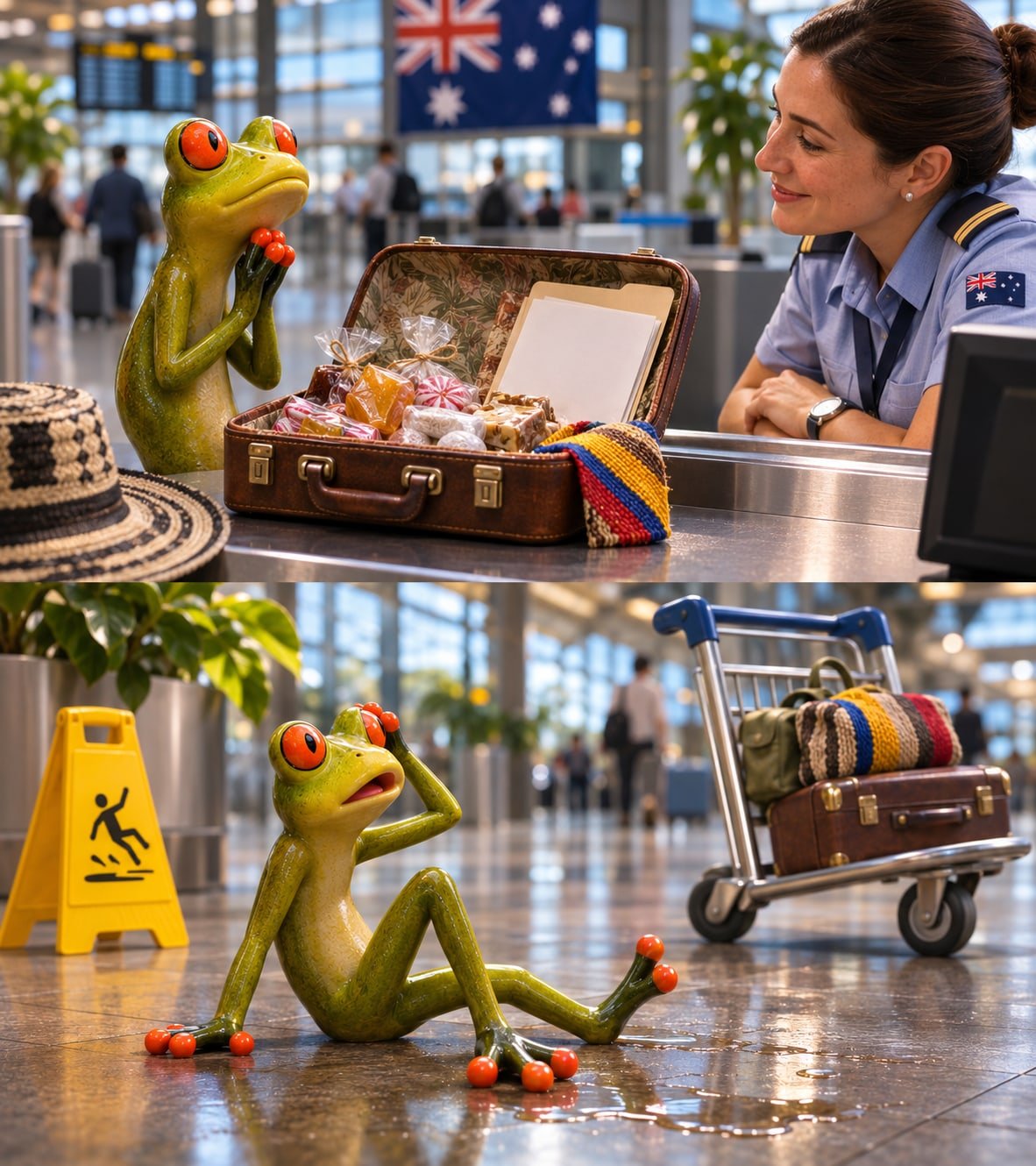
When a question about yellow fever came up, Sapito thought he was being asked whether he was ill. He switched to no. His folder held many documents, including the certificate the original account recalls being requested. He made the connection only when another traveller explained the question in Spanish. The solution had been inside his luggage. What he lacked was a way to reach it.
The next misunderstanding happened during a baggage inspection. Hearing drugs, Sapito thought of medicines and answered yes again. The officials pressed him for details. He tried to explain that he had something for a cold, but could not find the words.
He mimed a sneeze. A sound intended as a clue resembled, to those listening, the name of a substance he was not carrying. The more he tried to repair the conversation, the more suspicious his answer sounded.
The inspection continued. There were questions, a room and a fear too large for any of the words he knew. Eventually he could explain the misunderstanding to an official who spoke some Spanish. When allowed to leave, he did not know whether to feel relieved, angry with himself or simply exhausted.
One final incident remained. Pushing his luggage trolley and looking around, he crossed a wet patch of floor. He slipped. The trolley carried on and he landed on the ground.
That was his welcome: his first lesson in the vulnerability of misunderstanding while pretending to understand. These events belong to a particular historical journey and do not describe current entry procedures or requirements.
One sentence deserves as much room in a suitcase as a passport: I do not understand. Could you explain it another way?
Why do we sometimes pretend to understand instead of asking for an explanation?